
Get cannabis-specialized accounting that tracks profit by product, integrates with your POS, and gives you CFO-level guidance—so you can make confident decisions and maximize your margins.


We'll help audit-proof your Washington dispensary, stay 280E compliant, and seamlessly integrate cost accounting with your BioTrack tracking and cannabis POS systems—so you can focus on growth, not compliance headaches.


Work with us for Washington cannabis specialization: BioTrack integration, pioneer market challenges, competitive survival strategies—without Seattle premiums, full-time CFOs, or generic accountants missing consolidation pressures.

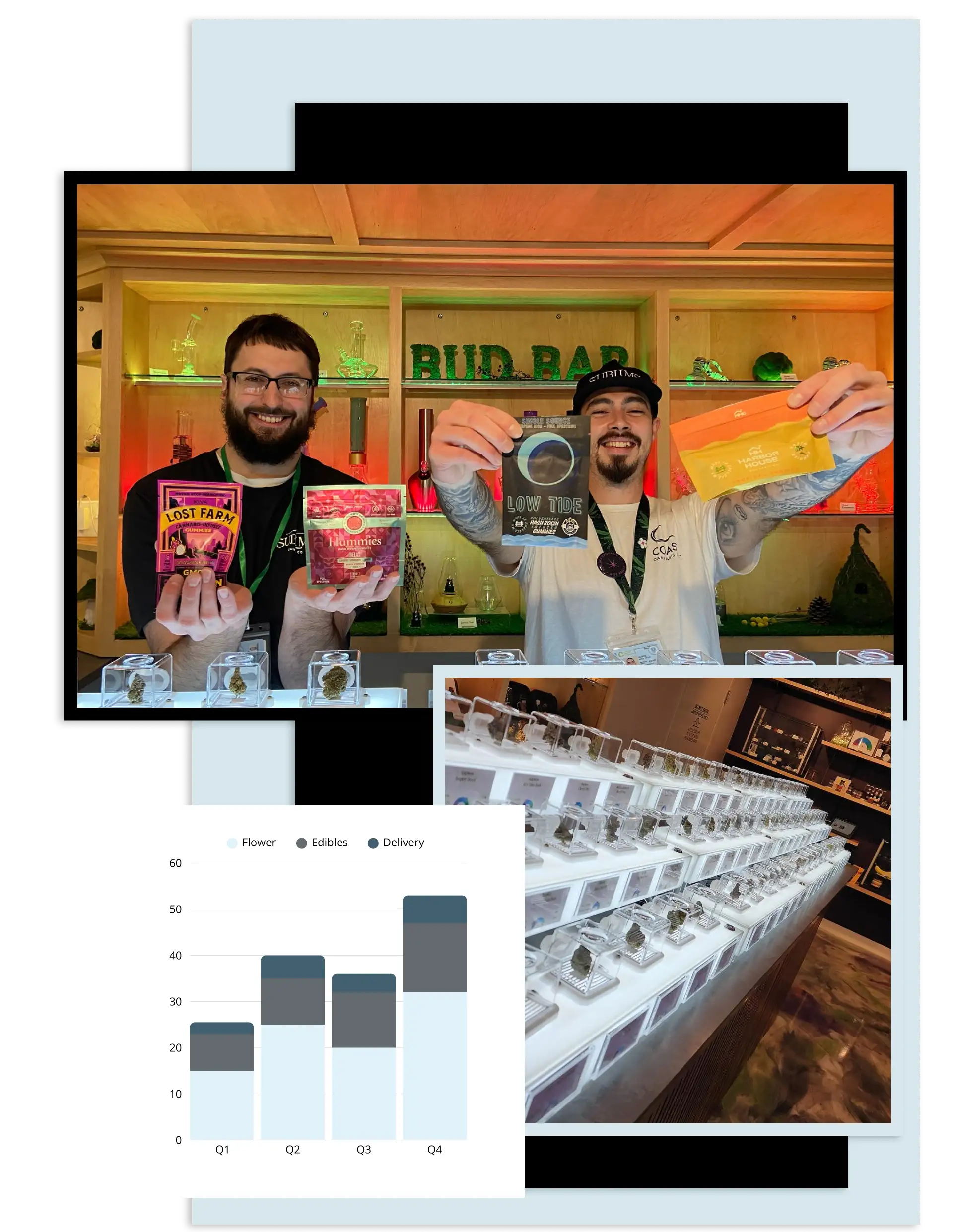
We love helping Washington dispensaries and cannabis companies establish perfect cannabis accounting, 280E compliance, and real profit tracking while ensuring complete tax compliance.

If you're searching for a cannabis CPA in Washington, you're operating in one of America's pioneering cannabis markets alongside Colorado. Washington launched adult-use sales July 2014, just months after Colorado, creating over a decade of operational history. Washington's cannabis market—serving 7.8 million residents plus significant tourism in Seattle and other urban centers—offers mature market dynamics where operational excellence and financial sophistication determine success. Your Washington cannabis business operates under BioTrack seed-to-sale tracking (Washington pioneered BioTrack implementation, unlike Colorado's Metrc), faces IRS Section 280E federal tax restrictions, and requires technology integration between your POS system and accounting software. Whether you're operating dispensaries in Seattle, Spokane, Tacoma, Vancouver, or throughout the Evergreen State, Washington's mature market demands financial sophistication that traditional Washington CPAs often cannot provide. You need a Washington cannabis accounting specialist who understands BioTrack integration, Washington State Liquor and Cannabis Board compliance requirements, and strategic financial planning that creates sustainable competitive advantage as Washington's market continues evolving with consolidation pressure from multi-state operators seeking premium assets in one of America's pioneering cannabis states that established operational frameworks and best practices now adopted nationwide alongside Colorado's pioneering efforts in the early days of legal cannabis in America.
Washington pioneered BioTrack seed-to-sale tracking when launching its adult-use program in 2014, choosing a different path than Colorado's Metrc. BioTrack uses 16-digit barcode identifiers rather than Metrc's RFID tags with 24-digit codes, but the core concept remains identical: every cannabis plant and product receives unique identifiers tracked from cultivation through retail sale. For accounting purposes, the key difference is integration ecosystem—fewer POS systems offer native BioTrack integration compared to Metrc's market dominance, requiring more careful vendor selection. Washington-compatible POS systems include Flowhub's BioTrack integration, leveraging deep Washington experience; Cova Software, which developed specific BioTrack connectivity; Dutchie POS, supporting both Metrc and BioTrack tracking systems; and several other platforms with varying integration quality. The accounting challenge remains identical regardless of tracking system: your financial records must reconcile perfectly with state compliance data. If QuickBooks shows $620,000 in October sales but Washington BioTrack reflects $617,200, you have a $2,800 discrepancy requiring investigation. Specialized Washington cannabis bookkeeping includes monthly BioTrack reconciliation comparing financial system inventory to state tracking database, investigating and documenting all discrepancies with root cause analysis, maintaining audit trails proving inventory continuity, and ensuring compliance with Washington State Liquor and Cannabis Board requirements. This monthly discipline ensures perpetual audit-readiness when state regulators conduct compliance reviews or when acquisition opportunities emerge requiring clean financial due diligence. Washington operators who treat BioTrack as separate from accounting create hidden liabilities that surface during audits or M&A transactions, potentially destroying enterprise value built over years in the Evergreen State's mature cannabis marketplace.
Washington's mature market after ten years of legalization creates unique dynamics. The state benefits from established infrastructure, experienced operators, and refined regulatory frameworks, but also faces challenges from intense competition (over 500 licensed retailers), price compression as supply increases, and sophisticated competitors with decade-long operational excellence. Washington's excise tax structure (37% on sales) creates particular burdens when combined with federal 280E restrictions, resulting in total tax burdens that can consume 70-75% of gross profit. This demands extraordinary financial discipline: product-level profitability tracking showing which items generate returns despite pricing pressure, channel-level profitability analysis revealing which platforms justify their fees (in-store versus Jane, Leafly, Weedmaps delivery), location-level performance analysis for multi-site operators distinguishing high-performing from underperforming dispensaries, detailed tax planning managing Washington's excise tax alongside federal 280E restrictions, and cash flow forecasting preventing operational disruptions when quarterly tax payments come due. Specialized Washington cannabis CPAs provide monthly financial statements with comprehensive analytics, quarterly business reviews discussing performance trends and strategic implications, tax planning sessions optimizing Washington-specific obligations, and CFO-level strategic guidance on capital allocation, expansion decisions, and operational optimization. This financial sophistication separates thriving Washington cannabis businesses from those struggling to survive in the Evergreen State's mature, competitive marketplace where operational mediocrity guarantees failure and only financial excellence enables sustainable success.
Washington dispensaries need POS systems with proven BioTrack connectivity and compliance features supporting Washington's regulatory requirements. The primary platforms used in Washington's mature market include Flowhub, which built its BioTrack integration specifically for Washington's pioneering market; Cova Software, offering specific BioTrack compliance features; Dutchie POS, providing multi-state tracking system support including BioTrack; Treez, with cloud-based architecture supporting Washington operations; and BLAZE, targeting higher-volume Seattle and urban dispensaries. Washington dispensaries—especially those in Seattle, Tacoma, and other tourist destinations—rely on ecommerce and delivery platforms for customer acquisition. Jane, Leafly, and Weedmaps drive discovery traffic but charge platform fees (8-15% of sales) that significantly impact already-compressed margins in Washington's competitive market. Sophisticated Washington cannabis accounting establishes chart of accounts tracking revenue by product type (flower, pre-rolls, vape cartridges, edibles, concentrates) and by sales channel (in-store, Jane, Leafly, Weedmaps, delivery), revealing true profitability after platform fees and attributable costs. Monthly financial statements with channel profitability analysis enable data-driven decisions about marketing allocation—discontinuing unprofitable channels, investing in high-return platforms, and optimizing overall channel mix. This operational intelligence creates competitive advantage in Washington's mature market where most dispensaries operate on aggregate revenue numbers without understanding which business activities actually generate profit versus which destroy value in the Evergreen State's decade-old cannabis marketplace.
Washington's mature market is consolidating as multi-state operators, private equity, and larger players acquire successful operations. Washington dispensaries positioning for premium valuations need pristine financials, demonstrated profitability, and operational excellence. Exit preparation includes maintaining audit-ready books with monthly BioTrack reconciliation and clean historical records, tracking product-level and channel-level profitability proving operational sophistication, documenting all compliance procedures showing mature risk management, establishing management teams and systems that operate without founder involvement, and building financial track records demonstrating sustainable growth and margin management despite Washington's challenging tax environment. Fractional CFO services for Washington cannabis businesses include strategic exit planning identifying potential acquirers and timing considerations, financial modeling showing how different growth strategies impact valuation, due diligence preparation ensuring records withstand buyer scrutiny, and deal structuring guidance optimizing after-tax proceeds from eventual sale. Washington operators who built businesses over the past decade as pioneers deserve to capture enterprise value reflecting their risk and operational excellence. Operators positioned with clean financials, demonstrated profitability, strategic locations (Seattle, urban markets), and brand strength will capture premium valuations—3-5x revenue or 8-12x EBITDA for well-managed operations. Those without financial discipline will exit for distressed valuations or become unsaleable. Getting financial infrastructure right now determines which category your Washington cannabis operation falls into as the Evergreen State's market continues maturing and consolidating around financially sophisticated operators.
Cannabis & 280E Tax & Accounting Specialist.
Adam Drust CPA
CannaDrust CPA