
Get cannabis-specialized accounting that tracks profit by product, integrates with your POS, and gives you CFO-level guidance—so you can make confident decisions and maximize your margins.


We'll help audit-proof your Delaware dispensary, stay 280E compliant, and seamlessly integrate cost accounting with your BioTrack tracking and cannabis POS systems—so you can focus on growth, not compliance headaches.


Work with us for Delaware cannabis expertise: BioTrack integration, small-state optimization, and strategic positioning—without Wilmington premiums, full-time staff your revenue can't support, or generic bookkeepers.

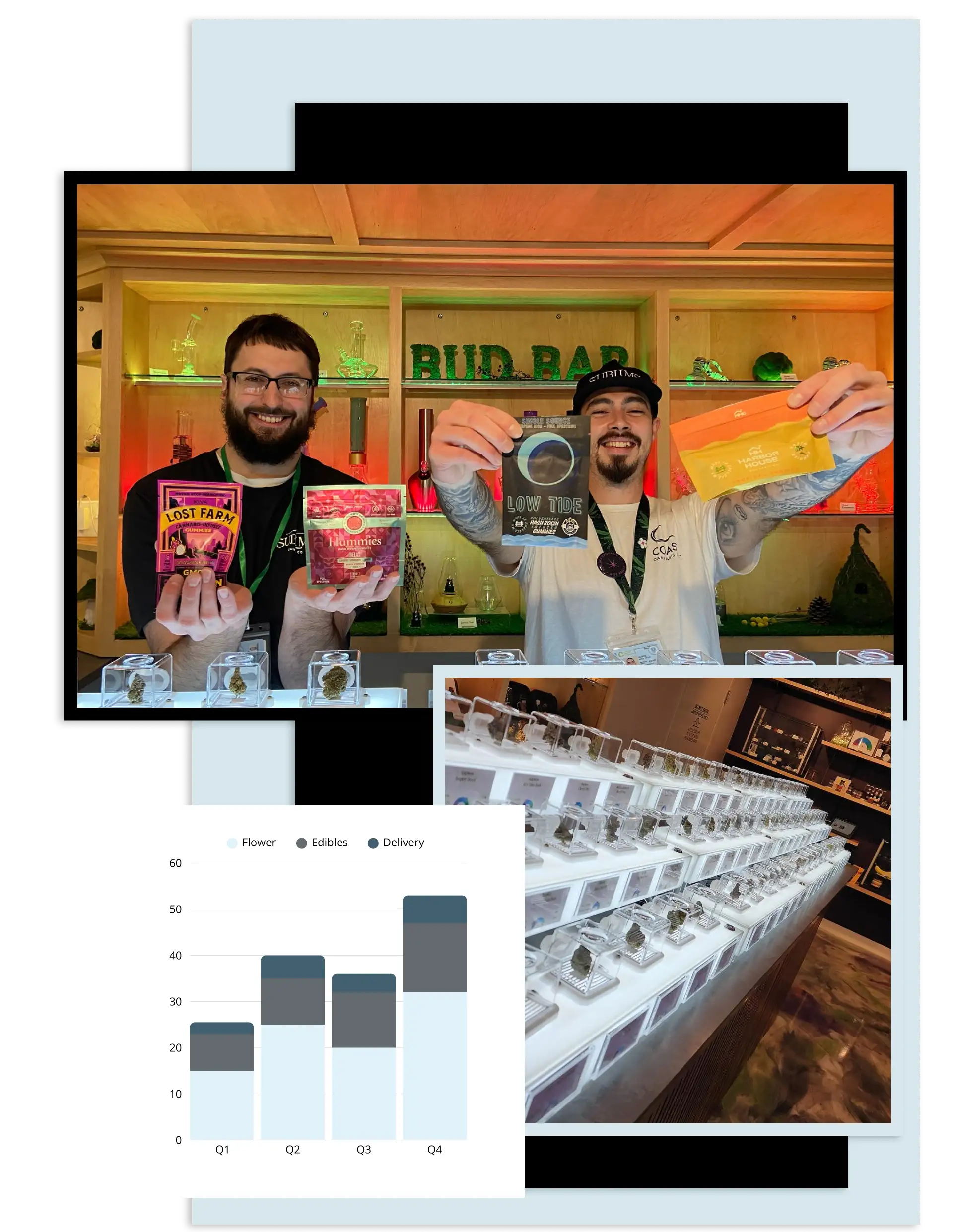
We love helping Delaware dispensaries and cannabis companies establish perfect cannabis accounting, 280E compliance, and real profit tracking while ensuring complete tax compliance.

If you're searching for a cannabis CPA in Delaware, you're entering one of the smallest but most strategic cannabis markets on the East Coast. Delaware legalized adult-use cannabis with retail sales infrastructure developing throughout 2024-2025, creating ground-floor opportunity for operators who establish compliant operations from inception. Delaware uses BioTrack as its seed-to-sale tracking system, joining Connecticut, Washington, and other states on this platform rather than the more common Metrc. Your Delaware cannabis business—whether dispensary in Wilmington, Dover, or Newark—faces IRS Section 280E federal tax restrictions identical to all U.S. cannabis operators despite state legalization. Most traditional Delaware CPAs either refuse cannabis clients or lack specialized knowledge to properly integrate BioTrack tracking data with financial records while maintaining 280E-compliant cost accounting. Delaware's small geographic footprint, proximity to major East Coast population centers (Philadelphia 30 miles, Baltimore 55 miles, Washington D.C. 90 miles), and limited competition create extraordinary opportunity for operators who implement proper cannabis accounting systems from day one. Whether you're an established Delaware medical operator transitioning to adult-use or a new entrant capitalizing on recent legalization, you need a Delaware cannabis CPA who understands BioTrack integration, 280E compliance, and strategic financial planning for emerging markets where early advantages compound into sustainable competitive moats.
Delaware cannabis operators use BioTrack seed-to-sale tracking instead of the more widely adopted Metrc platform. BioTrack uses 16-digit barcode identifiers rather than Metrc's RFID tags with 24-digit codes, but the core concept remains identical: every cannabis plant and product receives unique identifiers tracked from cultivation through retail sale. For accounting purposes, the key difference is integration ecosystem—fewer POS systems offer native BioTrack integration compared to Metrc, requiring more careful vendor selection. Delaware-compatible POS systems include Cova Software, which developed specific BioTrack integration for Delaware and Connecticut markets; Flowhub's BioTrack integration, adapted from Washington state experience; Dutchie POS, which supports both Metrc and BioTrack tracking systems; and several other platforms with varying integration quality. The accounting challenge remains identical regardless of tracking system: your financial records must reconcile perfectly with state compliance data. If QuickBooks shows $380,000 in November flower sales but Delaware BioTrack reflects $377,500, you have a $2,500 discrepancy requiring investigation. Specialized Delaware cannabis bookkeeping includes monthly BioTrack reconciliation comparing financial system inventory to state tracking data, documenting all discrepancies with root cause analysis (shrinkage, theft, compliance gaps, or accounting errors), and maintaining audit trails proving inventory continuity. This monthly discipline ensures perpetual audit-readiness when Delaware Division of Alcohol and Tobacco Enforcement conducts compliance reviews or when acquisition opportunities emerge requiring clean due diligence. Delaware operators who treat BioTrack as separate from accounting create hidden liabilities that surface during audits or M&A transactions, potentially destroying enterprise value built through years of operational excellence.
Delaware dispensaries need POS systems with proven BioTrack connectivity and compliance features supporting Delaware's regulatory requirements. The primary platforms used in Delaware's market include Cova Software, which specifically developed BioTrack integration for East Coast markets including Delaware; Flowhub, leveraging its Washington state BioTrack experience for Delaware operators; Dutchie POS, offering multi-state tracking system support including BioTrack; Treez, with cloud-based architecture supporting various state compliance systems; and BLAZE, targeting higher-volume dispensaries with robust tracking integration. Beyond core POS functionality, Delaware dispensaries—especially those near I-95 corridor with easy access from Philadelphia, Baltimore, and other markets—benefit from ecommerce and delivery platforms. Jane, Leafly, and Weedmaps drive customer discovery, but each charges platform fees (8-15% of sales or monthly subscriptions) that significantly impact channel profitability. Sophisticated Delaware cannabis accounting establishes chart of accounts tracking revenue by product type (flower, pre-rolls, vape cartridges, edibles, concentrates) and by sales channel (in-store, Jane, Leafly, Weedmaps, direct delivery), revealing true profitability after platform fees and attributable costs. This product and channel intelligence enables data-driven decisions about product mix and marketing allocation—while competitors chase revenue growth, sophisticated Delaware operators optimize profit margins and return on invested capital in the First State's emerging cannabis marketplace.
Delaware cannabis operators—particularly those new to the industry—frequently make catastrophic 280E compliance errors during their first year of operations. Section 280E prohibits cannabis businesses from deducting ordinary operating expenses, allowing only Cost of Goods Sold deductions. This creates effective tax rates of 60-75% on gross profit compared to standard 21% corporate rates other Delaware businesses enjoy. Common Delaware cannabis mistakes include treating 280E as a tax-season problem instead of daily operational requirement (cost accounting must track COGS in real-time, not be reconstructed annually), failing to capitalize labor costs for employees who touch inventory (budtenders, inventory managers, cultivation workers should be capitalized into product costs), deducting rent, utilities, and facility costs as operating expenses instead of allocating them proportionally to plant-touching spaces and capitalizing qualifying portions, taking marketing and advertising deductions despite explicit 280E prohibition (grand opening expenses, Leafly advertising, social media marketing are all non-deductible), deducting delivery driver wages and vehicle expenses as transportation costs instead of capitalizing delivery labor into COGS, and attempting creative entity structures like separate "management LLCs" that provide services to the cannabis operation (tax courts consistently reject these structures). Delaware operators influenced by traditional CPAs unfamiliar with cannabis often hear "just set up a management company to shift profits"—this strategy fails under IRS scrutiny and exposes businesses to significant audit risk. Specialized Delaware cannabis CPAs implement proper cost accounting from day one, conduct monthly expense classification reviews ensuring proper capitalization, maintain documentation supporting allocation methodologies, and provide audit defense when IRS examines returns. The return on investment is substantial—proper 280E compliance can save Delaware dispensaries $40,000-$120,000+ annually while eliminating audit risk that threatens business viability in the First State's competitive cannabis market.
Delaware cannabis operators face tax burdens that shock those unfamiliar with 280E economics. A Delaware dispensary generating $3.5 million annual revenue with 50% gross margin ($1.75 million gross profit) faces approximately $1-1.2 million in federal tax liability—57-69% effective tax rate on gross profit. Add Delaware state corporate income tax (8.7% on income over $60,000), sales tax obligations, and local business license taxes, and total tax burden reaches $1.1-1.3 million annually. This demands aggressive cash management: setting aside 30-35% of monthly revenue for quarterly federal estimated payments, maintaining cash reserves covering 3-4 months of tax obligations, budgeting for annual tax preparation ($3,000-$5,000) and potential audit defense, and planning for timing gaps between when revenue is earned (and taxed) versus when cash is collected from payment processors. Delaware dispensaries that fail to budget properly face catastrophic cash shortages during quarterly estimated payment deadlines. Fractional CFO services for Delaware cannabis businesses include quarterly tax planning sessions reviewing estimated payments and adjusting as revenue fluctuates, cash flow forecasting projecting tax obligations across upcoming quarters with scenario planning, strategic guidance on owner compensation, entity structure, and reinvestment decisions that optimize after-tax cash flow, and planning for eventual federal rescheduling that will eliminate 280E and dramatically improve cash flow. This proactive tax management prevents panic-driven mistakes Delaware operators make when caught unprepared: taking emergency loans at predatory interest rates to cover tax payments, missing estimated payment deadlines and incurring penalties and interest, pulling funds from operations and damaging inventory management or growth initiatives, or making hasty decisions about owner distributions that create additional tax complications. Getting tax planning right from launch separates sustainable Delaware cannabis businesses from those that generate impressive revenue but fail financially due to poor cash management in the First State's emerging cannabis industry.
Cannabis & 280E Tax & Accounting Specialist.
Adam Drust CPA
CannaDrust CPA