
Get cannabis-specialized accounting that tracks profit by product, integrates with your POS, and gives you CFO-level guidance—so you can make confident decisions and maximize your margins.


We'll help audit-proof your Oklahoma dispensary, stay 280E compliant, and seamlessly integrate cost accounting with your Metrc tracking and cannabis POS systems—so you can focus on growth, not compliance headaches.


Work with us for Oklahoma cannabis specialization critical for surviving America's most oversaturated market: Metrc compliance, brutal channel profitability analysis, margin protection—without expensive internal teams your thin margins can't support.

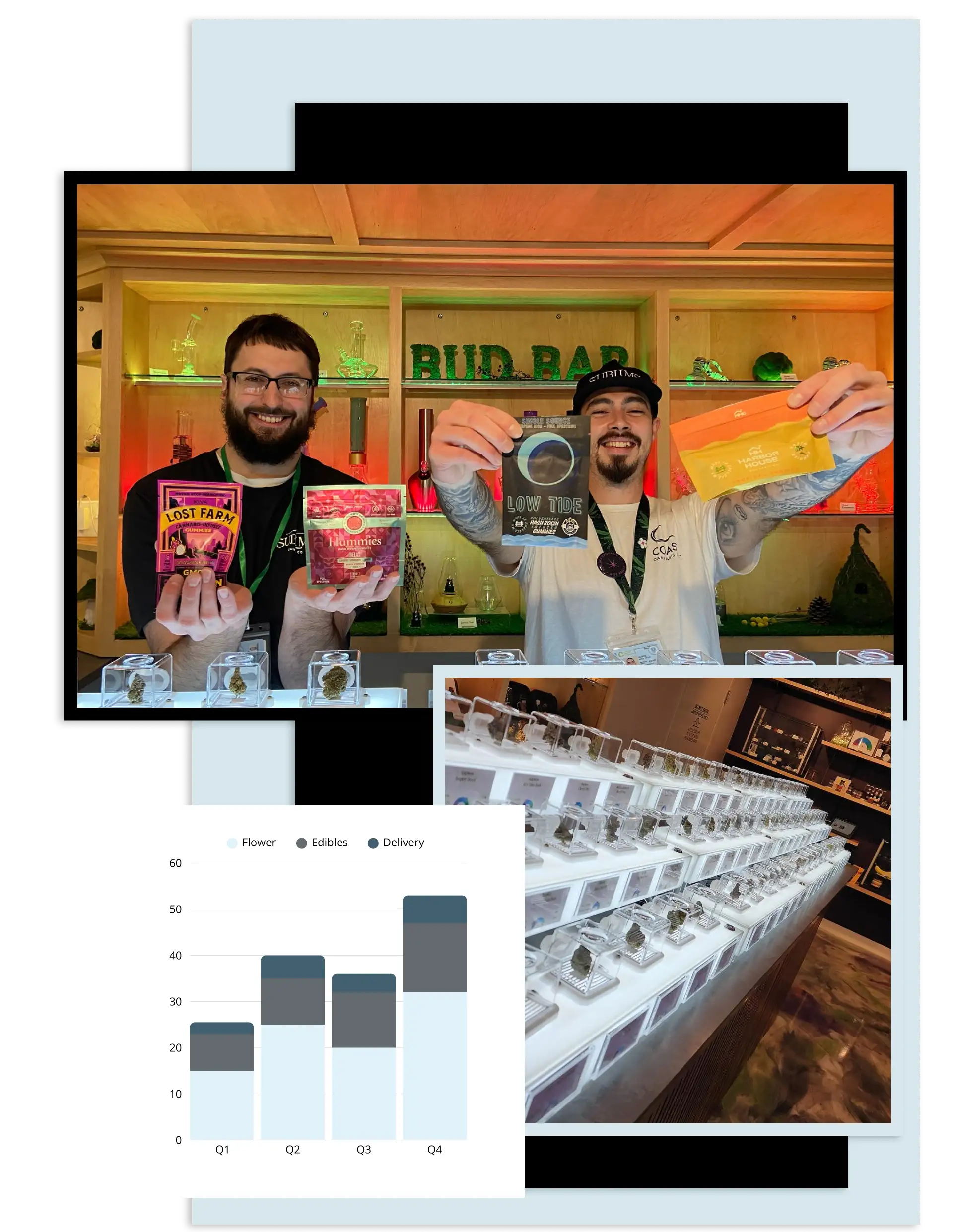
We love helping Oklahoma dispensaries and cannabis companies establish perfect cannabis accounting, 280E compliance, and real profit tracking while ensuring complete tax compliance.

If you're searching for a cannabis CPA in Oklahoma, you're operating in one of America's most unique cannabis markets. Oklahoma leads the nation in dispensary density with approximately 36 dispensaries per 100,000 residents—higher than Colorado, California, or any other state. This creates intense competition where operational efficiency and financial management separate successful operations from the majority struggling with thin margins and oversupply. Your Oklahoma cannabis business operates under Oklahoma Metrc seed-to-sale tracking (implemented December 2020), faces IRS Section 280E federal tax restrictions, and requires technology integration between your Dutchie POS or Cova system and accounting software. Whether you're operating dispensaries in Oklahoma City, Tulsa, Norman, or throughout the Sooner State, Oklahoma's hyper-competitive market demands sophisticated financial management that most traditional Oklahoma CPAs cannot provide. You need an Oklahoma cannabis accounting specialist who understands the challenges of operating profitably in America's most saturated market, can implement product-level and channel-level profitability tracking revealing which business lines actually generate returns, and provides strategic financial guidance that creates sustainable competitive advantage despite Oklahoma's extraordinary competition in a medical-only market where over 2,500 dispensaries serve 4 million residents.
Oklahoma's 36 dispensaries per 100,000 residents creates market dynamics unlike anywhere else. Compare to Colorado (15 per 100,000) or California (6 per 100,000), and Oklahoma's competitive intensity becomes clear. This saturation drives aggressive pricing competition, compressed margins, and high failure rates among operators lacking financial discipline. Oklahoma cannabis businesses cannot survive on operational competence alone—financial sophistication determines success or failure. Critical financial metrics for Oklahoma include product-level gross margin tracking showing which items remain profitable despite pricing pressure, customer acquisition cost analysis ensuring marketing spending generates positive returns, inventory turnover rates revealing demand patterns and working capital efficiency, break-even analysis showing minimum revenue needed to cover fixed costs, and cash burn monitoring ensuring adequate runway during slow periods. Fractional CFO services for Oklahoma cannabis businesses provide monthly financial dashboard reviews discussing these metrics and their implications, quarterly strategic planning sessions using financial data to inform operational decisions, competitive positioning analysis comparing your performance to market benchmarks, and scenario planning preparing for various market conditions (continued saturation, potential regulatory changes, consolidation opportunities). Oklahoma dispensaries without this financial sophistication operate blindly, making gut-feel decisions that compound poor performance until cash reserves deplete and business failure becomes inevitable. Specialized Oklahoma cannabis accounting establishes financial intelligence from day one, enabling data-driven decisions that optimize performance despite the Sooner State's extraordinary competitive challenges in America's most saturated cannabis marketplace.
Oklahoma dispensaries need POS systems that support operational efficiency and detailed analytics in highly competitive environments. The dominant platforms include Dutchie POS, offering full Metrc integration with Retail ID support and strong Oklahoma presence; Flowhub, marketing its Metrc expertise and detailed reporting capabilities; Treez, providing cloud-based operations with multi-location management for Oklahoma operators managing multiple sites; Cova Software, with specific compliance features for Oklahoma requirements; and BLAZE, targeting higher-volume dispensaries with advanced analytics. Oklahoma's competitive intensity means ecommerce and delivery platforms become critical for customer acquisition. Jane, Leafly, and Weedmaps drive discovery traffic, but platform fees (8-15% of sales) significantly impact already-thin margins. Oklahoma dispensaries must carefully analyze channel economics: is Weedmaps worth 10% of revenue if it drives customer acquisition that leads to repeat in-store purchases? Or does it simply cannibalize margin on customers who would have found you anyway? Sophisticated Oklahoma cannabis bookkeeping tracks revenue by product type (flower, pre-rolls, vape cartridges, edibles, concentrates) and by sales channel (in-store, Jane, Leafly, Weedmaps, delivery), revealing true profitability after platform fees and attributable costs. Monthly financial statements with channel profitability analysis enable data-driven decisions about marketing allocation—discontinuing unprofitable channels, investing in high-return platforms, and optimizing overall channel mix. This operational intelligence creates competitive advantage in Oklahoma's brutal market where most dispensaries operate on aggregate revenue numbers without understanding which business activities actually generate profit versus which destroy value in the Sooner State's oversaturated cannabis industry.
Oklahoma's competitive intensity and resulting margin pressure makes 280E compliance even more critical than in healthy markets. When gross margins compress to 40-45% (vs. 50-60% in less competitive markets), every dollar of COGS capitalization matters exponentially. Oklahoma cannabis businesses must maximize legitimate COGS through aggressive but defensible cost accounting: capitalizing 100% of labor for employees touching inventory (budtenders, inventory managers, cultivation workers, trimmers, packagers, delivery drivers), allocating maximum defensible facility costs to plant-touching spaces (cultivation, processing, retail floor all qualify—only back offices and administrative spaces don't), capturing every packaging material, label, testing fee, and processing supply in COGS, documenting cost allocation methodology with extraordinary detail proving reasonableness, and maintaining impeccable records that withstand inevitable IRS audit scrutiny. Oklahoma's thin margins mean difference between proper vs. improper 280E accounting can be business survival vs. failure. An Oklahoma dispensary with $3 million revenue and $1.35 million gross profit (45% margin) faces approximately $750,000-$850,000 federal tax liability under proper 280E accounting. Improper accounting that undercapitalizes COGS by 10% increases tax liability by $75,000-$100,000—potentially the difference between profitability and failure in Oklahoma's low-margin environment. Specialized Oklahoma cannabis CPAs implement aggressive cost accounting from day one, conduct monthly expense classification reviews ensuring maximum COGS capitalization, maintain documentation proving allocation methodology, and provide audit defense when IRS examines returns. This expertise delivers exponential returns in Oklahoma where every dollar of tax savings flows directly to profitability and competitive advantage in the Sooner State's extraordinarily challenging cannabis marketplace.
Oklahoma's extreme dispensary density raises strategic questions about long-term viability. While some operators thrive through operational excellence and financial discipline, many struggle with unsustainable economics. Oklahoma cannabis businesses should consider exit planning proactively rather than waiting for financial distress: building pristine financial records that support reasonable valuations if consolidation opportunities emerge, documenting operational systems and procedures that demonstrate transferable business value, maintaining compliance track records proving mature risk management, establishing customer databases and brand equity that create intangible value beyond physical assets, and developing management teams capable of operating without founder involvement. Oklahoma's market dynamics may drive consolidation where successful operators acquire struggling competitors, multi-state operators enter seeking market share, or vertical integration creates value through supply chain control. Fractional CFO services for Oklahoma cannabis businesses include strategic planning addressing market positioning and exit timing, financial modeling showing how different strategies impact valuation, due diligence preparation ensuring records withstand buyer scrutiny, and transaction structuring guidance optimizing after-tax proceeds. The brutal reality is that Oklahoma's oversaturated market cannot sustain 2,500+ dispensaries long-term—consolidation is inevitable. Operators positioned with clean financials, demonstrated profitability, and strategic positioning will capture value through sales or acquisitions. Those without financial discipline will close or sell for distressed valuations recovering minimal invested capital. Getting financial infrastructure right now determines which category your Oklahoma cannabis operation falls into when the Sooner State's inevitable market rationalization accelerates in coming years.
Cannabis & 280E Tax & Accounting Specialist.
Adam Drust CPA
CannaDrust CPA