
Get cannabis-specialized accounting that tracks profit by product, integrates with your POS, and gives you CFO-level guidance—so you can make confident decisions and maximize your margins.


We'll help audit-proof your Missouri dispensary, stay 280E compliant, and seamlessly integrate cost accounting with your Metrc tracking and cannabis POS systems—so you can focus on growth, not compliance headaches.


Work with us for Missouri cannabis specialization: Metrc compliance, multi-location profitability tracking, and "three M's" strategic positioning—without $85K+ controllers, St. Louis/KC premiums, or generic accounting missing margin opportunities.

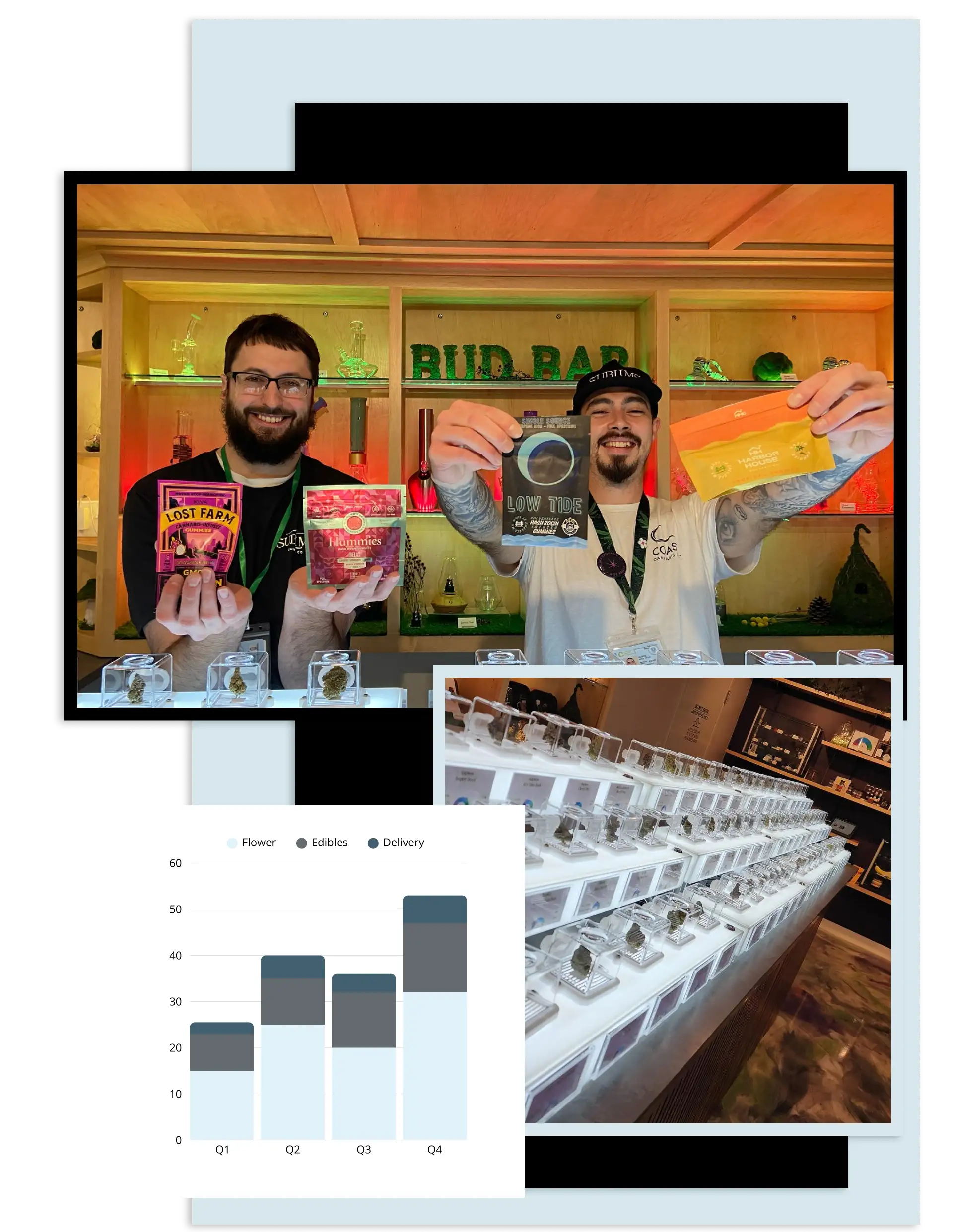
We love helping Missouri dispensaries and cannabis companies establish perfect cannabis accounting, 280E compliance, and real profit tracking while ensuring complete tax compliance.

If you're searching for a cannabis CPA in Missouri, you're operating in one of the most dynamic cannabis markets in America. Missouri represents one of Adam Drust's "three M's"—Massachusetts, Michigan, and Missouri—identified as priority markets with strong fundamentals and growth potential. Since legalizing adult-use cannabis in 2023, Missouri's market has experienced explosive growth, with established medical infrastructure transitioning seamlessly to recreational sales. Your Missouri cannabis business operates under Missouri Metrc seed-to-sale tracking, requires IRS Section 280E compliant cost accounting, and needs technology integration between your Dutchie POS or Cova system and financial records. Whether you're operating a dispensary in St. Louis, Kansas City, Springfield, or Columbia, Missouri's cannabis market offers extraordinary opportunity for operators who implement proper accounting infrastructure. Most traditional Missouri CPAs either refuse cannabis clients or lack specialized knowledge to properly reconcile Metrc tracking data with financial statements while maximizing COGS capitalization under 280E restrictions. You need a Missouri cannabis accounting specialist who understands the complete technology ecosystem, Missouri Division of Cannabis Regulation compliance requirements, and strategic financial planning that positions your operation for sustainable competitive advantage as the Show-Me State's cannabis industry continues rapid expansion and inevitable consolidation attracts multi-state operators and private equity seeking premium acquisition targets.
Missouri's cannabis market combines several favorable characteristics that create exceptional opportunity. The state's established medical program (launched 2018) provided infrastructure foundation that enabled smooth adult-use transition when voters approved Amendment 3 in 2022, with recreational sales beginning February 2023. Missouri implemented Metrc as its seed-to-sale tracking platform from the medical program's inception, meaning operators have mature compliance systems and integration capabilities. Missouri's 6+ million residents, central U.S. location, and reasonable regulatory framework create sustainable market dynamics—neither oversaturated like California nor underdeveloped like emerging markets. The state's existing cultivation facilities, processing operations, and retail infrastructure meant recreational launch leveraged established supply chains rather than starting from zero. Missouri dispensaries benefit from proven POS systems, established banking relationships (though federally restricted), and operational expertise developed through medical program experience. However, Missouri's transition from medical to adult-use created accounting complexity that many operators underestimate. Revenue tracking must distinguish medical versus recreational sales (different tax treatment), inventory management must handle products allocated across both programs, and cost accounting must properly capitalize expenses under 280E restrictions while maintaining Missouri regulatory compliance. Specialized Missouri cannabis CPAs establish chart of accounts tracking medical and recreational revenue separately, implement monthly Metrc reconciliation comparing financial records to state tracking data, maintain product-level and channel-level profitability analysis, and provide strategic financial guidance optimizing performance as Missouri's market matures. This financial infrastructure separates sophisticated Missouri operators from competitors flying blind on aggregate revenue numbers without understanding which products, channels, or customer segments actually generate profit in the Show-Me State's competitive cannabis marketplace.
Missouri implemented Metrc in 2018 for its medical cannabis program and expanded to cover adult-use when recreational sales launched. Metrc uses RFID tagging technology where every cannabis plant receives a unique 24-digit identifier tracked from cultivation through processing, laboratory testing, packaging, distribution, and retail sale. Missouri dispensaries receive inventory with Metrc package tags that must be scanned during retail transactions, updating state tracking database in real-time while deducting inventory. The accounting challenge is reconciliation: your financial records must align perfectly with Metrc inventory data. If QuickBooks shows $520,000 in October flower sales but Missouri Metrc reflects $517,200, you have a $2,800 discrepancy requiring investigation. That gap could represent inventory shrinkage (loss, theft, damage), compliance violations (sales not properly recorded in Metrc), accounting errors (incorrect revenue recognition), or integration problems between POS and accounting software. Each explanation has different implications—some are normal business operations, others are regulatory red flags that could jeopardize your Missouri cannabis license. Specialized Missouri cannabis bookkeeping includes monthly Metrc reconciliation procedures comparing financial system inventory to state tracking database, investigating and documenting all discrepancies with root cause analysis, maintaining audit trails proving inventory continuity from receipt through sale, and ensuring compliance with Missouri Division of Cannabis Regulation requirements. This monthly discipline ensures you're perpetually audit-ready when state regulators conduct compliance reviews or when acquisition opportunities emerge requiring clean financial due diligence. Missouri operators who treat Metrc as separate from accounting create hidden liabilities that surface during audits or M&A transactions, potentially destroying years of enterprise value built through operational excellence.
Missouri's mature Metrc infrastructure means dispensaries have numerous proven POS options with established integration capabilities. The dominant platforms in Missouri include Dutchie POS, offering full Metrc integration with Retail ID support and capturing significant Missouri market share; Flowhub, marketing itself as the premier Metrc integrator since 2015 with strong Missouri presence; Treez, providing cloud-based multi-location capabilities important for operators managing St. Louis and Kansas City dispensaries; Cova Software, which developed specific compliance features for Missouri regulatory requirements; and BLAZE, targeting high-volume urban dispensaries in Missouri's major markets. Beyond core POS functionality, Missouri dispensaries rely on ecommerce and delivery platforms to drive customer acquisition. Jane, Leafly, and Weedmaps generate discovery traffic and online ordering, but each charges platform fees (8-15% of sales or monthly subscriptions) that significantly impact channel economics. Many Missouri dispensaries chase revenue across all available channels without analyzing true profitability after platform fees, delivery costs, and attributable marketing expenses. Sophisticated Missouri cannabis accounting establishes chart of accounts tracking revenue by product type (flower, pre-rolls, vape cartridges, edibles, concentrates, topicals) and by sales channel (in-store, Jane, Leafly, Weedmaps, Dutchie delivery, direct ecommerce), revealing which products and channels generate actual profit versus which destroy margins. Monthly financial statements with product and channel profitability analysis enable data-driven decisions about product mix optimization, marketing allocation, and operational focus—creating competitive intelligence most Missouri competitors lack because they're operating on intuition rather than financial data in the Show-Me State's rapidly maturing cannabis marketplace.
Missouri cannabis operators—especially those who transitioned from medical-only to adult-use without proper accounting expertise—frequently make catastrophic 280E compliance errors. Section 280E prohibits cannabis businesses from deducting ordinary operating expenses, allowing only Cost of Goods Sold deductions. This creates effective tax rates of 60-75% on gross profit. Common Missouri mistakes include treating 280E as an annual tax-time issue instead of daily operational requirement (cost accounting must track COGS in real-time throughout the year), failing to capitalize labor costs for employees who touch inventory (budtenders, inventory managers, cultivation workers, trimmers, packagers), deducting rent, utilities, and facility costs as operating expenses instead of allocating them proportionally to plant-touching spaces and capitalizing qualifying portions into COGS, taking marketing and advertising deductions despite explicit 280E prohibition (grand opening expenses, Leafly advertising, social media marketing are all non-deductible), deducting delivery driver wages and vehicle expenses as transportation costs instead of capitalizing delivery labor into COGS, and attempting creative entity structures like separate LLCs providing "management services" (tax courts consistently reject these arrangements). Missouri operators influenced by traditional CPAs unfamiliar with cannabis often implement two-entity structures attempting to shift profits to a non-plant-touching entity—this strategy fails under IRS scrutiny because the tax code looks at the substance of operations, not legal entity formalities. Specialized Missouri cannabis CPAs implement proper cost accounting from day one, conduct monthly expense classification reviews ensuring proper capitalization, maintain documentation supporting allocation methodologies with detailed procedures and calculations, and provide audit defense when IRS examines returns. The return on investment is substantial—proper 280E compliance can save Missouri dispensaries $50,000-$150,000+ annually while eliminating audit risk that threatens business viability. More importantly, establishing proper cost accounting from inception builds product-level profitability intelligence that informs strategic decisions while competitors operate on guesswork in Missouri's competitive cannabis market.
Missouri's cannabis market is entering its consolidation phase where multi-state operators, private equity, and larger players acquire successful operations. Missouri dispensaries positioning for premium valuations need pristine financials, demonstrated profitability, and operational excellence. Exit preparation includes maintaining audit-ready books with monthly Metrc reconciliation and clean historical records, tracking product-level and channel-level profitability proving operational sophistication, documenting all compliance procedures showing mature risk management, establishing management teams and systems that can operate without founder involvement, and building financial track records demonstrating sustainable growth and margin management. Fractional CFO services for Missouri cannabis businesses include strategic exit planning identifying potential acquirers and timing considerations, financial modeling showing how different growth strategies impact valuation, due diligence preparation ensuring your records withstand buyer scrutiny, and deal structuring guidance optimizing after-tax proceeds from eventual sale. Missouri operators who build businesses around eventual exit capture premium valuations when consolidation opportunities emerge—buyers pay 3-5x revenue or 8-12x EBITDA for well-managed operations with clean financials, proven profitability, and growth potential. Missouri dispensaries with accounting disasters, compliance gaps, or operational chaos command fraction of these multiples or become unsaleable. The time to prepare for exit is now—building proper financial infrastructure, operational systems, and strategic planning that positions your Missouri cannabis operation for maximum value when you're ready to transition, retire, or capitalize on consolidation opportunities in the Show-Me State's maturing cannabis industry.
Cannabis & 280E Tax & Accounting Specialist.
Adam Drust CPA
CannaDrust CPA